Automate. Improve.
Increase Revenue.
Let’s build the solutions your business needs to grow.
Book a strategy callRebranding your company may sound intimidating, but it is nothing to be afraid of. Most of the major brands and industry leaders have overhauled their image at one point or another—from McDonald’s to Instagram to the Huffington Post.
Rebranding can happen for a number of reasons. Maybe the company needs to re-establish its place in the market, or reflect a major new acquisition. Maybe there’s new technology to show off, or new industry trends to follow. Maybe the old brand has received criticism for previous mistakes, and needs to cool off for a while.
The fact is that times change, style changes, and consumer expectations change. If your company has been around long enough, chances are it will need to evolve and adapt to the latest trends if it is going to be successful.
Undergoing a rebranding can be a time-intensive process depending on your company size, marketing assets and the resources available for the process. If it’s time for your brand get a makeover, here are five important steps you don’t want to miss.
1. Think Carefully About Why You’re Rebranding
What do you hope to gain? What are the risks of walking away from an established brand? Do you have other options that might be easier? Rebranding takes time and money to do well—and should not be entered into lightly. Make sure you do thorough research before initiating a rebranding, including internal research.
2. Get Buy-In From The Top
The CEO and executive leadership of your company should be directly involved from the beginning, and should ideally be leading the initiative and providing a strong vision for the project. They’re going to be involved at some point: it’s better for that to be sooner rather than later.
3. Talk With Customers and Stakeholders
Talk to customers—yours, and other people’s—as well as industry partners to work out your brand strategy. Ask about how people perceive your organization’s strengths and weaknesses. Find out what frustrates them, what they need, and what obstacles stop them from working with you. Such information will help you position strategy and messaging that will help you thrive in your market.
4. Overcommunicate
Hammer home the new brand strategy. Share it in ways that prompt people to directly experience it. Continually lay it out through regular workplace communication and training. Make it part of engagement activities. Make sure the message gets through.
5. Find The Right Partner
If you’re thinking about rebranding, you’ll need a partner who understands that brand strategy is a business strategy, and can show deep experience melding the two goals. Remember: you’ll need to make sure your business pursuits are aligned with your brand. Rebranding only to fall short of your new promises is worse than not rebranding at all. If you want to make sure you are hitting all your goals, you should look for a digital marketing agency that can not only help you change your brand image but your online presence and processes as well. Approaching the project from this holistic perspective will help ensure your rebranding is a triumphant success.
Stay tuned for Part Two: 5 Mistakes to Avoid When Rebranding Your Company
Questions about how content marketing and web design strategies could elevate your brand and improve your bottom line? Schedule a consultation with one of our digital strategists by clicking here.
The digital revolution has allowed many companies and individuals to move past the format of trading their time and effort for money and into more passive and scalable income stream structures.
The sports coaching industry is no different. This lucrative industry is expected to grow by $9 billion over the next four years, yet many trainers feel they have hit a financial plateau—whether they are self-employed or work for a sports training company.
Last week, ATX Web Designs founder Daniel Griggs was featured in a Forbes article titled Sports Trainers: Monetize Your Knowledge and shared advice for coaches and trainers who are looking to scale their business and grow exponentially. The article explains some of the steps needed to create a digital platform that will turn knowledge and experience into profit.
These steps include:
1. Create content tiers. It is important to match your digital content to your audience. If you’re looking to monetize your knowledge for an online audience, you will need to identify audience segments and create tiers of content that apply to each one. For example, a college athlete needs a different approach than a mother of four young children.
To read the full article,click here.
Instagram is not only a free tool for small businesses, it is an extremely powerful one. There are 1.4 billion users on the photo-based social media platform who spend about 30 minutes every day scrolling through content. About 200 million Instagram users visit a business profile at least once a day, while 130 million click to learn more about businesses’ products and services.
Running a small business requires the ability to multitask and wear many hats. While large corporations have teams of people researching, posting and responding on social media platforms, small companies don’t always have the time to prioritize engaging on apps like Instagram. Unfortunately, this means that many small businesses miss out on the significant opportunities Instagram offers for building brand awareness, generating new leads, and even making sales.
If you are a small- or medium-sized-business owner and aren’t able to dedicate a lot of time to social media management, here are a few tips to help you keep up with the trends and get the most bang for your buck when you are able to post.
Follow our blog for more digital marketing tips!
If you run a product-based business or e-commerce store, every piece of information on your website is critical—including your product descriptions. Many companies overlook their product descriptions, believing the product photos will speak for themselves. However, product descriptions can be invaluable for both SEO (bringing users to your site) and engagement (getting users to interact with or buy your products).
Here are 7 ways to create better product descriptions so that your audience is informed, engaged, and persuaded to purchase.
Questions about how content marketing and web design strategies could elevate your brand and improve your bottom line? Schedule a consultation with one of our digital strategists by clicking here.
Millennials may be criticized for being entitled, self-focused, and spending $7 a day on expensive coffee, but they are also invaluable to your business—no matter what the industry. For all the flack they receive from older and more experienced generations, they have the power to make or break many brands.
Whether you offer a product or a service, are a large corporation or a small startup, here are three reasons your company should be focused on marketing to millennials:
Questions about how content marketing and web design strategies could elevate your brand and improve your bottom line? Schedule a consultation with one of our digital strategists by clicking here.
Nearly 75% of individuals looking for an attorney begin their search online, 98% use a search engine and more than 70% visit a law firm’s website before making a decision, according to the National Law Review. That means it is critical for legal practices to have an effective digital strategy that will meet the demands of audiences in 2021.
In August, ATX Web Designs Founder Daniel Griggs was featured in an Forbes article titled The Best Website Strategies for Law Firms in 2021. The article discusses ways attorneys and law firms can optimize their online presence, reach more potential clients and grow their practices.
Some of the strategies recommended in the article included:
1. Make sure you own your website. If you don’t have 100% ownership of your law firm website, you could be losing business. It may seem tempting to hire a template-based web design company that can plug your law firm’s information into an existing website design, but this approach can prevent you from customizing your website and tailoring it to your target demographic.
2. Invest in SEO. Consumers in 2021 like to do their own research when determining the best products and services for them. An individual who is going to invest in legal services will likely use a search engine such as Google and scan through multiple websites before deciding on one they like. It is important that your website is search-engine-optimized so it appears on the first page of search engine results.
3. Employ mobile-first design. Consumers today are much more likely to use a mobile phone to search online and access websites than they are to use a desktop computer. The mobile experience should be the first priority in establishing a credible and engaging online presence for your law firm.
To read the full article, click here.
Questions about how content marketing and web design strategies could elevate your brand and improve your bottom line? Schedule a consultation with one of our digital strategists by clicking here.
Video is a powerful tool for increasing brand awareness and engagement. In fact, more than 50 percent of marketers say video helps them build trust with their audience. Right now, video-based apps like TikTok are skyrocketing in popularity as are the video functions of social media platforms, such as Instagram’s reels. Studies have shown that more than 45 percent of consumers will react or convert after watching a video.
There is a right way and a wrong way to use video in your digital marketing efforts. If done correctly, video marketing can lead to incredible growth for your company. However, the propensity for videos to “go viral” can be a blessing and a curse. Earlier this year, the CIA released a recruitment video that spread like wildfire on the internet and not in a good way. The piece received ridicule and backlash for being “overly woke” and trying too hard to reach the Millennial and Generation Z demographics.
Here are 5 tips for using video content to connect with your online audience effectively:
Questions about how content marketing and web design strategies could elevate your brand and improve your bottom line? Schedule a consultation with one of our digital strategists by clicking here.
The average consumer sees between 6,000 and 10,000 ads in a day. Being constantly inundated with paid content means that it has become easier and easier for people to tune out online advertisements. Studies have found that most individuals see an ad seven times before they engage with it.
Social media ads can be a great way to generate leads, convert new customers, and raise brand awareness. However, creating effective social media ad campaigns is both an art and a science, and it takes a lot of time and energy to craft something that will actually have an impact.
There are many strategies and techniques that can help your social ads reach more people and generate more engagement. But the biggest secret to creating an effective social media ad is understanding your audience and their values.
At the end of the day, people don’t purchase a product or service for the product or service itself. Instead, they are hoping that their purchase will meet some sort of internal value or need. These values can include things like health, safety, self expression, adventure and peace. Understanding these motivators and learning how to talk about them to your audience is the key to generating good social media ads. Anything less runs the risk of being irrelevant to your audience at best and losing their business at worse.
Here are three steps to understanding and targeting your audience’s values:
1. Create a customer persona. If you haven’t already, create a customer persona for your ideal audience. Break down their lifestyle, their habits, their background, and most importantly the problem they are trying to solve. This will help you better identify their core values.
2. Identify your motivating keywords. Different keywords and calls-to-action will appeal to different audiences. Make sure you are using the right words for your target customer. For example, an individual who is seeking adventure or self-expression might be motivated by keywords such as “discover,” “create” or “experience.” However, someone who is seeking relaxation or ease might be more motivated by terms like “enjoy,” “deserve,” “get.”
3. Experiment. Social media ads are all about experimentation. What your audience wants might change over time, so it is important to collect as much data as possible on how they’re interacting with your current post and ads. Double down on what seems to be working and don’t get too attached to your pet campaigns. Remember that these ads are about your audience, not your own personal taste and style.
Questions about how content marketing and web design strategies could elevate your brand and improve your bottom line? Schedule a consultation with one of our digital strategists by clicking here.
One of the best ways to increase website traffic for your business is through search engine optimization, or SEO, which improves the chances someone will organically find your website through an internet search. The higher a company ranks in search engine result listings for specific keywords, the more likely a user is to find that company’s website.
Google and other search engines use algorithms to determine which websites are most relevant to a user’s search query. There are a number of strategies that companies can use to make those algorithms work in their favor. However, because the digital world is constantly changing and evolving, it is important to stay up to date on the best SEO practices and how to implement them.
There is a lot of misinformation circulating about what is effective when it comes to SEO. This is mainly a result of certain standards and practices becoming outdated over the years as search engines become faster and better at identifying what users want and need.
Here are seven common myths about SEO to watch out for:
The click-through rate for Google Ads is less than 2%, and the click-through rate for Facebook ads is less than 1%. In today’s digitally competitive environment, that means your SEO strategy needs to be foolproof in order to attract new leads and customers online.
Ready to take your marketing to the next level? Let’s talk.
The largest consumer generation is entering its prime spending years, has a collective $600 billion in spending power, and is redefining the way we do digital branding and marketing.
We’re talking about millennials. Marketers have had their eye on millennials—or adults ages 23 to 38—for years and are paying close attention to this generation’s digital habits to understand how best to reach them in the oversaturated online space.
Millennials browse the internet on their phones three times as much as they do on desktop computers or laptops. That means websites today don’t just need to be developed with mobile browsing in mind, they need to prioritize mobile. In fact, experts recommend that service providers consider creating a custom mobile app to serve the needs of their customers instead of relying solely on the mobile version of their website.
Not all apps are created equal, however. There are several best practices that will help ensure your mobile app is millennial friendly and will meet the expectations and standards of this massive consumer demographic.
To upgrade your mobile app experience, consider the following strategies:
Business owners have more options than ever when it comes to creating their own websites. What once required extensive coding and programming knowledge can now be accomplished through a drag-and-drop visual tool. However, while template-based and DIY websites are becoming more popular, they can also open businesses up to significant security risks.
Daniel Griggs, founder and CEO of ATX Web Designs, discusses some of these risks in an article recently published in Forbes, Is Your Small Business Website Secure?. The article outlines some of the common ways that hackers can infiltrate a small business website as well as some of the steps business owners can take to secure their sites.
These include:
To read the full article on the Forbes website, click here.
Questions about how content marketing and web design strategies could elevate your brand and improve your bottom line? Schedule a consultation with one of our digital strategists by clicking here.
Solopreneurs—or entrepreneurs who run a business on their own—are on the rise in the United States, numbering more than 40 million. Whether by choice or by necessity, solopreneurs wear every hat in their company, from CEO to accountant to customer service representative to marketing rep.
As busy people who are often operating on a tight budget, solopreneurs and small business owners sometimes overlook the importance of marketing their product or service in the digital space. There is a common misconception that digital marketing requires a large financial investment, so many solopreneurs see strong branding as a luxury rather than a necessity.
Regardless of the size of your business or ad budget, you can build a brand of your own. You may not be a Coca Cola, but you can still think about your message and how you want people to remember your service or product.
Here are three branding tips for solopreneurs that won’t break the bank.
You may not have a $250,00 ad budget, but as a solopreneur, you can still work on building organic traffic and generating attention for your brand. This, in turn, will lead to more leads, sales and brand loyalty.
The old saying tells us that “the customer is always right,” and successful brands know that there is a lot of wisdom in putting the customer first. After all, the reason your company exists is to provide a solution for some sort of problem that your customer has.
In the business world, the term “pain point” refers to a specific problem that your target audience is experiencing. It is the reason they are looking to your company (or your competitors) for a particular product or service. However, it is easy for businesses to get the pain point wrong or misunderstand what will really engage a target audience member and convert prospects into loyal customers.
This is because the obvious, surface-level pain point does not always address the core customer motivation. To really understand motivation, we have to understand that every human has a core set of psychological needs—such as safety, connection, respect, autonomy and freedom—and that products and services are simply ways to meet those needs.
For example, when John subscribes to a meal catering service, it’s not just because he wants to eat delicious food (although that might be part of the motivation). He subscribes to a meal service because he values his free time and autonomy and doesn’t want to spend hours cooking in the kitchen every week. His pain point is likely a lack of freedom and flexibility in his schedule or perhaps feeling overworked and overwhelmed.
By speaking to this hidden pain point, a meal service is much more likely to get John’s attention and convert him into a loyal customer.
To discover your customers’ hidden pain point, start with the obvious pain point and ask yourself what motivations might lie underneath. Then survey your target demographic and create audience personas so that you can confirm your predictions and narrow in on the core needs and desires your brand fulfills.
What value does your business offer?
Many entrepreneurs and business owners are accustomed to talking about the Unique Value Proposition (UVP) of their business. A UVP, also called a Unique Selling Proposition, essentially describes the benefits your company offers and how you differ from the competition. While it can be very useful to define your UVP, there is another way to think about business value.
Customers don’t actually buy products or services for the products and services themselves. This might seem like a bizarre statement, but it’s true. Customers purchase things that will meet a core, underlying need or desire for them, and these needs and desires are tied to the customer’s value system.
In other words, Jim doesn’t subscribe to a laundry service because he needs his laundry done. He subscribes because he values time and freedom—two things he will have more of if he outsources his laundry to a company. Similarly, Jill doesn’t buy a name brand purse because she needs a bag to hold her items. She likely purchases it because she values the respect and feeling of importance she will feel owning a designer handbag.
Coca Cola is a great example of value-based marketing. Coke commercials rarely try to sell soda. Instead, they sell a feeling of community, togetherness, and happiness. Their marketing motto is “creating brand value through content excellence,” and their campaigns certainly reflect that statement. For instance, the Share a Coke campaign encouraged customers to share a Coca Cola with a person whose name was written on the side of the bottle. Not only did this campaign produce viral video content, but it traded on the individual consumer’s personal connections to boost sales.
Companies that know the deeper value of their product in addition to the top level, immediate benefits can market and sell their brand far more effectively. Identifying and targeting core customer values and needs is the key to convincing them to invest in your product or service.
“Sustainable growth” has become a popular phrase in the business world. Startups and small businesses in particular are focused on scaling their companies quickly yet dependably. After all, a company that grows too quickly without the proper structure and processes in place might risk burnout or the inability to match supply to demand. On the other hand, a company that grows too slowly may lose momentum and squander all its capital.
Digital technology has allowed for the exponential growth of small businesses, particularly in online spaces. The startup trend reflects just how easy it is to launch a venture with limited capital and grow it steadily in a short period of time.
However, scaling a small business sustainably is easier said than done. There are many pitfalls and challenges that entrepreneurs and small business owners face. Without proper guidance and strategy, they may find their company either stagnating or becoming unstable.
Here are five best practices for scaling a small business in a way that will encourage reliable growth for years to come.
Lawyers are like plumbers. We’re always going to need them. Through the ups and downs of the economy over the past 10 years, the legal industry has been steadily growing, but it’s also been going through some massive changes.
The truth is, even though demand is consistent, the legal industry will not be immune from the digital revolution. More and more people are searching for legal help online, and most clients will check out a lawyer’s website before hiring them. Millennials are driving a lot of this—they’re getting older, buying houses, running businesses, getting married, and getting divorced.
Legal professionals need to level up in the digital space if they want to compete. The Baby Boomer generation is aging out and the new generations have higher standards when it comes to online presentation and services. The sooner firms realize this and start investing in digital tech, the better chance they have at success.
Here are 3 tips for upgrading your legal website:
If you’re not seeing a steady increase of traffic, leads and conversions through your law firm website, then it’s time for an upgrade.
A lot has changed over the past year. We were already living in a digital age, but the COVID-19 pandemic has issued us into a new era where online business is not only popular—it is crucial. In fact, nearly 51% of small businesses have increased online interactions with their customers and about 36% are doing sales online, according to e-commerce support platform Oberlo.
Consumer habits and the global economy are changing, which means that the financial industry will be majorly affected—and credit unions in particular. As member-owned, non-profit organizations, credit unions will need to adapt to the times if they hope to compete with large banks and financial institutions.
Here are seven strategies that smart credit unions should incorporate if they want to stay relevant in 2021 and engage their target customer base.
Last month, ATX Web Designs Founder Daniel Griggs was featured in a Forbes article titled How Tech Can Revolutionize The Music Industry During the Pandemic. ATX the Brand is based in Austin, Texas—the live music capital of the world and a burgeoning tech hub. The Forbes piece explains how the tech and music industries can join forces to help preserve arts and entertainment during a time of significant loss and change.
Here is an excerpt from the article:
One of the biggest lifestyle disruptions of the Covid-19 pandemic has been the loss of live music and entertainment. For an industry that relied heavily on ticket sales and sponsorships from live performances, the restrictions on large gatherings and congregating indoors were a heavy blow. Some venues and artists attempted to find loopholes or work around regulations by hosting socially distanced events, but the concert industry still forfeited more than $30 billion as a result of the pandemic. The BBC estimated that musicians lost two-thirds of their income in 2020.
Enter the techies. As the owner of a web design and digital marketing agency, I have seen the demand for web-based solutions and virtual alternatives explode during the Covid-19 pandemic. My company is based in Austin, Texas, which is both the “Live Music Capital” of the world and an emerging tech hot spot that has outranked Silicon Valley for the past two years. It logically follows that Austin would lead the way in discovering new ways to optimize the convergence of technology and live music.
Austin’s annual music festival, South by Southwest (SXSW), typically takes place in March, drawing hundreds of thousands of visitors from across the globe and generating more than $300 million in economic impact for the city of Austin. The festival was canceled in 2020 as a result of the pandemic but has reemerged in 2021 as a virtual event.
As a tech entrepreneur, I was excited about the possibilities of a digital SXSW experience, but as a music lover, I wanted something more. I was missing the raw, unfiltered, exciting nature of intimate live performances and underground events — that feeling of walking into a bar and discovering my new favorite local band or artist.
To read the full article on Forbes’ website, click here.
We were already living in a digital economy before COVID-19, but the global pandemic has emphasized the need for companies of all types to improve their online presence and prioritize digital marketing.
Studies show that in 2021, nearly 50 percent of consumers are avoiding leaving their homes and also predict that 2.14 billion people will buy goods and services online this year. After a year of lockdown, many companies have discovered innovative ways to market and offer their products and services online—and some are making the switch to virtual operations permanent.
While COVID-19 cases are decreasing and businesses in some states are reopening their doors, marketing will never be the same. It is time for brands to upgrade their digital presence or risk becoming irrelevant.
Franchises in particular can benefit from investing in their online branding. Franchises face a unique marketing challenge. To succeed, franchisors need to support the independence of individual franchisees while maintaining a brand continuity. Online marketing efforts need to be both creative and consistent.
Here are five ways franchises can upgrade their online presence to stay competitive and thrive in 2021.
As a franchise, it isn’t enough to have a polished corporate website. It is also vital that franchisee sites and social media accounts are consistent, are optimized for search engines, and reflect your corporate brand. Remember that a better digital structure will create more brand value, visibility and credibility, and will ultimately help your franchisees increase sales and retain customers.
ATX Web Designs offers branding strategy and digital brand development services. For more information, drop us a line!
Running a small business requires the ability to multitask and wear many hats. Entrepreneurs and small business owners don’t always have the resources to hire staff or assistants to complete the tasks that many larger companies dedicate whole departments to. A small business owner often has to handle the administrative, marketing, customer service and financial aspects of the company in addition to providing or organizing the delivery of products and services.
One aspect of small-business ownership that can feel daunting and overwhelming is social media management. While large corporations have teams of people researching, posting and responding on social media platforms, small companies don’t always have the time to prioritize engaging on Facebook, Instagram, Twitter and other sites.
If you are a small- or medium-sized-business owner and aren’t able to dedicate a lot of time to social media management, here are a few tips to help you keep up with the trends and get the most bang for your buck when you are able to post.
On May 21, ATX Web Designs Founder Daniel Griggs was featured in a Forbes article titled Digital Transformation is About Process, Not Products. ATX the Brand is based in Austin, Texas—one of the fastest growing tech hotspots in the country. Some experts predict it may eclipse Silicon Valley as a hub for digital innovation. Tesla founder Elon Musk is opening a factory outside the city and tech giants Intel, Apple, Oracle and Facebook all have headquarters or offices in the area.
As a web development and digital marketing agency, ATX the Brand works with many tech companies in the Central Texas area, as well as local entrepreneurs and startups. Our team is able to observe trends within the industry and speak to the ways businesses can successfully capitalize on new developments related to digital branding and marketing.
One of the biggest trends we have seen among Austin-area business owners is a push for the “digital transformation” of their companies in order to stay relevant and competitive in the rapidly evolving digital economy.
Here is an excerpt from the article on digital transformation:
The unfortunate truth is that many businesses equate their online brand with their website and see “digital transformation” as no more than a site upgrade or redesign. The fact of the matter is that digital transformation is about your company’s processes, not about your products. Your processes include your customer relationship management (CRM) system, your security, your marketing strategies and your administrative systems — and these processes are vital when it comes to sustainably growing your business. They are the pieces that your customer doesn’t immediately see or know to look for but will ultimately have the biggest impact on their experience with your business.
Your website and mobile app are important, but they are really just the tip of the iceberg. If your company hopes to stay competitive in the digital economy, you need more than a pretty website or trendy mobile app. You need to understand the mind and the values of the modern consumer and learn how to build your business processes around the needs of your target audience.
In focusing on the visual aspects of their brand, some business owners forget to ask themselves the following important questions:
• How do I manage bookings?
• How is customer data filed and organized?
• What is my process for following up on leads and inquiries?
• How are my services promoted and marketed?
• What is my process for gathering feedback and implementing changes?
The answers to all of these questions are critical for growing a business in a digitally competitive economy.
To read the full article on Forbes’ website, click here.
You’ve got to spend money to make money, according to the old saying, but how much should small and medium-sized businesses be investing into marketing and advertising? Whether your business is growing rapidly or you are just figuring out how to make ends meet, marketing is an essential component of company operations that you can’t afford to ignore. While some businesses do very well through word-of-mouth marketing, there is a limit to how much you can scale through organic referrals alone.
The U.S. Small Business Administration recommends that businesses generating less than $5 million a year spend about 7 to 8 percent of gross revenue on marketing and advertising. Other industry experts have suggested anywhere from 5 percent to 14 percent.
If these numbers seem high to you, or you are wondering how much you are realistically able to invest in marketing, here are five ways to stretch your marketing and advertising budget to get the most bang for your buck.
On July 2, ATX Web Designs CEO Daniel Griggs was featured in Forbes in an article titled Is Your Small Business Website Secure?. As website templates and DIY web design programs become more popular, they also increase the potential risk of security threats.
The article outlines several ways that small businesses in particular can help ensure their websites can protect customer information and company data, as well as preventing other security breaches.
Here are a few of the important security questions business owners should ask about their websites, as outlined in the Forbes piece:
• Is your website hosted on a secure server with an SSL certificate? If you collect private information from site users, you need a hypertext transfer protocol secure (HTTPS), which prevents the interception of data. Additionally, SSL will encrypt information so that it cannot be breached.
• Does your website require complex passwords? Requiring all users to use complex passwords when signing into your site will help prevent their accounts from being hacked. For example, you can require users to use a combination of uppercase letters, lowercase letters and special characters in their passwords.
• Do you have a firewall in place? Firewalls can block duplicate internet protocol (IP) addresses automatically, which prevents spammers and hackers from registering multiple accounts from the same computer.
• Does your website contain custom coding? Unfortunately, website templates built through CMS like WordPress can be more susceptible to hacking. Custom coding is much more difficult to breach.
• Are your plugins up to date? Failing to update your software and plugins can result in security vulnerabilities and issues on your website.
To read the complete article, click here.
The web design industry is a fast-paced and rapidly evolving one. Every year, new innovations in graphic design, user interface design, marketing, and backend development lead to new trends for websites and mobile applications.
Over the past year, we have seen businesses of all sizes increase their investment in their web presence. We were already living in a digital economy before COVID-19, but the global pandemic has emphasized the need for companies to improve their online brand and prioritize digital marketing.
Consumer habits have also changed, with more and more individuals choosing to shop online instead of in person. With the increased online participation and standards of the modern consumer, it is essential for businesses to keep up with design trends and present a digital brand that is relevant, engaging and effective in meeting its long-term goals.
Here are the top 20 website design trends predicted for 2021:
Questions about how content marketing and web design strategies could elevate your brand and improve your bottom line? Schedule a consultation with one of our digital strategists by clicking here.
About 42 percent of the world’s population, or 3.2 billion people, use social media, and the average user spends 2-3 hours a day on platforms like Facebook, Instagram, Twitter and TikTok. Businesses have recognized the value of engaging with this massive online audience and social media ads have become an essential piece of modern marketing.
There is an overwhelming amount of demand for user attention on social media websites and apps. The average social media user sees between 6,000 and 10,000 ads per day and is inundated with content. That means that it is more important than ever for businesses to be smart about the advertising content they produce.
Here are 10 tips for creating better, more compelling social media ads.
Questions about how content marketing and web design strategies could elevate your brand and improve your bottom line? Schedule a consultation with one of our digital strategists by clicking here.
Having a well-designed, user-friendly website is the first step toward developing a successful online brand. But great web design is practically useless without good copy. The text on your website is just as important as its aesthetic and usability.
Studies have found that website visitors will navigate away from a page if they cannot find what they are looking for within 10 seconds. That means your website copy has 10 seconds to convince users that your company can solve their problems better than the competition can.
Many business owners and entrepreneurs do not know where to start when it comes to creating content for their websites. It can feel overwhelming to try to condense an entire company or brand down into a few simple paragraphs on a landing page or homepage. As a result, many websites are bogged down by irrelevant or cumbersome content that turns site visitors away instead of converting them into paying customers.
Working with a professional content creator or digital marketing company is the best way to make sure your website messaging and branding is just right. However, there are a few easy ways that you can instantly improve your website copy on your own. Here are five strategies for creating more engaging, effective content for your website:
Provide value. Your audience’s attention needs to be earned, so each piece of content on your site should provide some sort of value. Identify what your specific audience values then use bold, simple headlines and straightforward copy that showcase how you can provide that value.
Having a well-designed, user-friendly website is the first step toward developing a successful online brand. But great web design is practically useless without good copy. The text on your website is just as important as its aesthetic and usability.
Studies have found that website visitors will navigate away from a page if they cannot find what they are looking for within 10 seconds. That means your website copy has 10 seconds to convince users that your company can solve their problems better than the competition can.
Many business owners and entrepreneurs do not know where to start when it comes to creating content for their websites. It can feel overwhelming to try to condense an entire company or brand down into a few simple paragraphs on a landing page or homepage. As a result, many websites are bogged down by irrelevant or cumbersome content that turns site visitors away instead of converting them into paying customers.
Working with a professional content creator or digital marketing company is the best way to make sure your website messaging and branding is just right. However, there are a few easy ways that you can instantly improve your website copy on your own. Here are five strategies for creating more engaging, effective content for your website:
Having a solid social media strategy for your business is a crucial element of brand marketing. The average person spends about two and a half hours on social media every day while millennials, the largest consumer demographic, spend closer to three.
Social media engagement—or the comments, likes and shares your posts receive—are the best indicator of an effective social presence. If your account has tens of thousands of followers but little interaction with those followers, your content is falling on deaf ears. As a commercial brand, your social media accounts should strive for quality over quantity and help you build a solid foundation of loyal fans and customers.
Whether you are a social media novice, or have an established company brand online, here are seven tips for improving engagement with your audience.
Questions about how content marketing and web design strategies could elevate your brand and improve your bottom line? Schedule a consultation with one of our digital strategists by clicking here.
It is no secret that people like to think about themselves. It is one of our favorite topics. That’s why it should come as no surprise that when a user visits your website, they are usually thinking about themselves, their problems, and how your product or service can specifically benefit them.
User-centered design puts the customer in the spotlight. It puts their needs, objectives and expectations at the center of design and content decisions in order to better engage and, ultimately, increase conversions.
As a business owner, it might be tempting to build your website and online marketing strategy around your company’s history, mission and accolades. But research shows that the most effective way to generate leads and improve conversion rates is to put the user and their needs front and center.
Here are three ways to implement user-centered design and content strategy through your website and digital marketing.
1. Identify your audience
When a user visits your website, they should feel like the site was designed specifically for them. By understanding your audience and specifically naming or referencing them at the top of your site, you are signaling that you offer both relevance and value to them.
In today’s digital age, attention spans are short and a user could leave your website within a matter of seconds if they don’t find the content relevant. Users want to know “Is this product for me?” The faster you can answer that question, the more likely you are to engage with the user.
2. Identify their problem
The No. 1 reason a user will visit your website is because they have some type of problem they are trying to solve. What end users really want to know is “How will this product or service make my life better?”
Your website should be your best salesperson, and a good salesperson first gets to know the customer’s needs and then talks about the product or service. Your website should do the same. By setting up the problem-solution framework within the website design and content, the likelihood of improving conversion rates greatly increases.
3. Don’t brag
While reviews and testimonials can be effective in establishing credibility and brand trust, don’t get caught up in trying to prove how great your company is. Users want to determine this for themselves and too much bragging can begin to sound sales-y and turn some users away.
Instead, keep the focus on the customer and how your product or service can benefit them. Try using “you” language instead of or in addition to “we” language. Emphasize the value you can offer as opposed to how great you are at offering it.
By following these tips you can create a website that increases conversions through a client-centered approach. These tips can also be applied to your mobile app, social media and online marketing.
When most people hear the word “brand,” they think of a company name or logo. They may even picture a specific, popular brand, such as Coca-Cola or Kleenex.
Following this logic, many entrepreneurs and business owners think of their company brand as purely visual—how the product and marketing looks and feels. But a business brand is much more than colors, fonts and design. A brand image is the entire experience a user has when interacting with your business, including their emotional experience, their mental associations with your business, and their interactions with customer service. Ideally, this brand image closely matches the company’s mission and vision. If not, it may be time for a redesign or brand overhaul.
When creating or upgrading a company website, branding is one of the most important elements to consider. If your website branding isn’t strong, engaging and consistent, you are guaranteed to lose out on leads and customers. Sometimes a complete website redesign is necessary, while in other cases, small, strategic fixes can make a world of difference.
Here are five proven ways to strengthen the branding on your company’s website to boost your brand image and bottom line.
Over the past year there have been dramatic shifts in the way business runs in the United States. The COVID-19 pandemic has changed the economic landscape and affected consumer habits and priorities. It has also altered the infrastructure and internal processes of many companies, leading to an increased focus on remote employment and digital services. Some industries—such as hospitality and tourism—have experienced major financial setbacks, while others—such as healthcare services and social services—are flourishing and expected to grow significantly in the coming years.
This means that B2B companies need to reorient themselves to the current business climate and pivot their marketing strategies to address the needs and priorities of 2021. We are living in a new type of society with new values, and experts predict that many of the pandemic-related changes are here to stay. For example, studies show that nearly 50 percent of consumers are avoiding leaving their homes and are purchasing more goods and services online. This shift will affect businesses of all types and sizes—whether they offer a digital-based product or not.
Here are five tips for B2B companies that will help them keep up with the times and tailor their marketing strategies to more effectively reach their target audience.
ATX Web Designs offers branding strategy and digital brand development services. For more information, drop us a line!
Have you heard the story about the man who built his house from scratch with no plan, blueprint, or design? Of course you haven’t, because this would be a ridiculous approach to constructing a building and would likely be an enormous waste of time and money.
Before you build a house, you need to go through a planning process. You assess your needs, wants, and functional requirements, and you hire an architect to create a blueprint so the home is completely mapped out before ground is broken. Sometimes the planning phase takes just as long, if not longer, than the construction phase.
Building your business brand is similar to building a new house. It’s incorrect to assume you can have an idea for a product or service and jump straight into implementation. While it may be possible in rare circumstances, it seldom leads to a sustainable, established brand that can easily scale and grow.
Your business brand is the story your company tells. It is the holistic experience your audience has when interacting with your company. These interactions range from an individual’s experience on a phone call with customer service to a fleeting glimpse of your logo on a billboard to the content on your business social media accounts.
Building a brand from the ground up takes intentionality, strategy, and a clear vision for the future, as well as the steps needed to make that vision a reality. Simply put, you need a brand blueprint. Each aspect of your business—from colors and fonts to the wording of your emails to your website design—needs to align with your core mission, personal values, and financial goals or you will fail to build a solid, cohesive brand.
Your blueprint will need to include elements such as:
By establishing a solid brand blueprint, you can more effectively increase leads, improve sales, create a company reputation, strengthen customer loyalty, and scale your business.
ATX Web Designs offers branding strategy and digital brand development services. For more information, drop us a line!
Every brand tells a story.
Some stories are like an exciting and compelling novel that the reader can’t put down. Others are more like a waiting room magazine that is skimmed and tossed aside.
So what story does your brand tell?
Your brand is the total impression your company makes. It includes your company personality, values, aesthetic, reputation, marketing strategies and customer service.
Brands succeed by telling a compelling story that rallies their target audience to action. A successful story has the following elements:
A hero. Every good story has a protagonist. In branding, the hero is your audience or your prospect. Not your company. Companies that focus on themselves and their accolades in their marketing content won’t effectively grab their audience’s attention.
A premise. The premise of a narrative is the overall message or concept it offers. Your company’s premise is the foundation for your brand and illustrates why a prospect should engage with your content. Without a solid premise, potential leads or customers won’t get past the first few pages of your story.
A problem. When is the last time you watched a great movie where the hero did not face any obstacles? In branding, the problem is your audience’s pain points. Successful brands hone in on their audience’s specific pain points and present their product or service as a solution to these pain points.
A victory. What makes the victory in a story satisfying? When the audience can emotionally identify with it and picture themselves in the hero’s shoes. Successful brands use strategies like impactful images, video, testimonials, vivid descriptions and clear calls-to-actions to help audiences imagine how a particular product or service will meet their needs and values—thus completing the hero’s journey.
That’s a real page turner.
Have a story you want your brand to tell? Reach to our expert team to schedule your consultation by clicking here.
If your website and mobile app are doing their job, they should run on their own. As an entrepreneur or business owner, your goal should be to get your digital platforms to the point where you are primarily monitoring the activity. There may be certain tasks you want to carry out personally, but everything else should be automated.
Here are three ways to automate your digital presence effectively and efficiently.
These days nearly everyone has had an app idea. What’s yours?
Maybe it came to you in the shower, or while driving, or when getting frustrated with a particular system or process for the 100th time. Over the past 10 years, it has become more simple to create a mobile app, but that doesn’t mean it has become easier.
There is a lot of strategy, backend planning, design, and testing that goes into creating a successful mobile application. There are many companies that advertise mobile app design or development, but not all of them can help you build strategy and make sure your app will be popular and profitable once released.
If you have an idea for a great mobile app and you’re ready to turn your idea into reality, here are the three most important things to keep in mind:
The most important part of building a mobile app is passion. If you are passionate about your product and the problem it is solving, you will have the motivation to do what it takes to see it succeed. Want to learn more about getting your mobile app idea off the ground? ATX Web Designs is a full-service mobile app design and development company. Schedule your consultation today by clicking here.
When designing or redesigning a business website, many companies start with the visual branding elements: the colors, the photos, the graphics, the cool features.
Although content is sometimes an afterthought in the website development process, it is equally as important as functionality or design. You may have a high-quality product promoted on a sleek, modern website, but a weak content marketing strategy will still cost you leads and sales.
Content marketing is the strategic creation of text and multimedia that informs a user and leads them through a specific journey—typically from awareness to consideration to action.
Here are five ways to improve your website content to more effectively market your product and keep your audience engaged.
Questions about how content marketing and web design strategies could elevate your brand and improve your bottom line? Schedule a consultation with one of our digital strategists by clicking here.
Hiring a web design and development agency is a smart move for businesses of any size and in any industry. These days, a company’s brand and reputation depend largely on its online presence. A high-quality website and engaging digital marketing content could be the deciding factors between a company’s success and failure.
Not all web design agencies are created equal, however, and one of the most significant variables is size. If you’re considering web design services, you may be struggling to decide whether to hire a freelancer, small agency, medium-sized agency, or large agency.
It can be a daunting task to wade through the pros and cons of hiring a small or large web design company, so we have simplified it for you. The following is a breakdown of both the benefits and disadvantages of agencies of various sizes.
Freelancers
Pros: Cost and flexibility are two advantages offered by freelancers. Freelance web designers and developers typically set their own schedule and rates, and may be able to customize both for your project.
Cons: There is less accountability and more risk when working with a freelancer, even those who come with positive reviews. In addition, a freelancer cannot offer the diversity of experience and skill available through an agency.
Small Agency
Pros: Small agencies (2-10 people) are sure to give your project personalized attention. They may also cater to a particular audience and have industry-specific knowledge. Sometimes, not always, small agencies charge a rate comparable to freelancers.
Cons: Small agencies may not have the resources to complete complex projects in a timely manner. They may also not have the experience or technical skills that can be found at larger companies with more staff and a broader portfolio.
Medium Agency
Pros: Medium agencies are the best of both worlds. They have the staff and resources to handle even the most complex projects, but they are small enough to maintain personal connections with clients.
Cons: Medium-sized agencies may not offer the reduced rate you would receive from a freelancer or small agency.
Large Agency
Pros: Large agencies have experience and resources at their disposal. Their diverse portfolios and large staff allow them to take on extensive and complex projects.
Cons: Large agencies can be less personal. Your project may be outsourced or viewed as just a number, and you may not receive the personal attention or customization you’re seeking. You may also encounter more bureaucracy and red tape with a large agency.
If you have questions about your web design project and would like to discuss options with design and development professionals, please reach out to us.
Branding isn’t just about recognizable labels or Superbowl commercials or even popularity. Every company that exists has a brand identity.
Simply put, brand identity is how your consumers view your company or product. A business’ personality, values, marketing techniques and aesthetic all contribute to its unique brand identity.
Some small businesses and new businesses might operate under the misconception that they need to be well-established or famous to have a company “brand image,” but that isn’t the case.
It isn’t a question of whether or not your company has a brand identity, but whether you are harnessing the power of your brand. Branding is an important marketing tool that can be used to increase leads, improve sales, create a company reputation and strengthen customer loyalty.
To further clarify, here is a short list of what brand identity isn’t:
ATX Web Designs offers branding strategy and digital brand development services. For more information, drop us a line!
No matter how innovative, effective or successful your brand, you will always have competitors. Original concepts rarely exist—if you believe something is a great idea, chances are someone else thought of the same thing.
In a competitive market, what often sets your company apart is not the quality of the product or service, but the quality of the branding.
Branding creates the emotional experience for users interacting with your company. Effective brand strategy can generate new leads, increase sales and strengthen customer loyalty.
So how do you differentiate your brand in a fast-paced and ever-evolving digital marketplace? Here are five tips to get you started.
ATX Web Designs offers digital brand consulting and strategy services. Contact us for more information.
Solopreneurs—or entrepreneurs who run a business on their own—are on the rise in the United States, numbering more than 40 million. Whether by choice or by necessity, solopreneurs wear every hat in their company, from CEO to accountant to customer service representative.
As busy people who are often operating on a tight budget, solopreneurs and small business owners sometimes overlook the importance of marketing their product or service. There is a common misconception that marketing requires a large financial investment, so many solopreneurs see strong branding as a luxury rather than a necessity.
Regardless of the size of your business or ad budget, you can build a brand of your own. You may not be a Coca Cola but you can still think about your message and how you want people to remember your service or product.
Here are three branding tips for solopreneurs that won’t break the bank.
You may not have a $250,00 ad budget, but as a solopreneur, you can still work on building organic traffic and generating attention for your brand. This, in turn, will lead to more leads, sales and brand loyalty.
Franchises are a popular business structure that face a unique challenge when it comes to marketing. To be successful, franchisors need to support the independence of their individual franchisees while also maintaining a consistent brand image.
There are three common marketing mistakes that franchise owners make, and they all relate to the way independent franchisees present themselves online.
Here are the pitfalls to avoid when developing marketing strategies for your franchise:
A better digital structure will create more brand value, visibility and credibility, and will ultimately help your franchisees increase sales and retain customers. ATX Web Designs is skilled and experienced at helping franchises create consistent brands, rank highly on search engines, and improve sales through cohesive marketing efforts. Visit our franchise page to learn more.
Your website is likely the first place consumers encounter your brand, and the design not only conveys information about your products and services, but also speaks to your values, style, and relevance.
In an article published by Inc., ATX The Brand Founder Daniel Griggs responded to five common website design myths and shared the reality behind good web design.
Myth 1. Your website can’t serve multiple audiences
There may be gaps in technological knowledge and aesthetic taste, but that doesn’t mean your website design can’t appeal to multiple demographics. Work smarter, not harder, to engage with each of your target audiences by finding the areas where their preferences overlap. For example, the baby boomer and millennial generations may both prefer large font and less cluttered design.
Myth 2. Content is content
Not all content is created equal. The average website visitor will leave a page after 10 to 20 seconds if they are unable to access the information they need, so your site should convey your main message as quickly and simply as possible. Be as bold and blatant as you can about answering the three W’s—Who are you? What do you do? Why should a user do business with you? If your website has a high bounce rate, this could be an indicator that you are not keeping it simple enough.
Myth 3. You need to tell your whole story on your homepage
Your users’ first interaction with your website should make them feel like it was designed for them. Avoid overwhelming site visitors with details about every facet of your product or service and instead create clear calls to action that help specific audiences quickly and easily navigate to the content they need.
Myth 4: A well-designed desktop version is good enough
A well-designed desktop version of your website is important, but research shows that the mobile version is crucial. The Pew Research Center reports that 28 percent of millennials are smartphone-only internet users, meaning that nearly one third of the country’s largest consumer demographic will be viewing your website solely on their phones.
Myth 5: You don’t need a website audit
Quality website and mobile app design requires a professional set of eyes. A website audit is a comprehensive review of your design and content that will help determine whether you are reaching your target audiences in the most efficient and effective way possible. A full audit will help expose weak spots and improve the usability of your website and mobile app to ensure you are reaching the greatest amount of people in the most effective way. This will help conversion, which means more leads.
Your website is likely the first place consumers encounter your brand, and the design not only conveys information about your products and services, but also speaks to your values, style, and relevance.
In an article published by Inc., ATX The Brand Founder Daniel Griggs responded to five common website design myths and shared the reality behind good web design.
Myth 1. Your website can’t serve multiple audiences
There may be gaps in technological knowledge and aesthetic taste, but that doesn’t mean your website design can’t appeal to multiple demographics. Work smarter, not harder, to engage with each of your target audiences by finding the areas where their preferences overlap. For example, the baby boomer and millennial generations may both prefer large font and less cluttered design.
Myth 2. Content is content
Not all content is created equal. The average website visitor will leave a page after 10 to 20 seconds if they are unable to access the information they need, so your site should convey your main message as quickly and simply as possible. Be as bold and blatant as you can about answering the three W’s—Who are you? What do you do? Why should a user do business with you? If your website has a high bounce rate, this could be an indicator that you are not keeping it simple enough.
Myth 3. You need to tell your whole story on your homepage
Your users’ first interaction with your website should make them feel like it was designed for them. Avoid overwhelming site visitors with details about every facet of your product or service and instead create clear calls to action that help specific audiences quickly and easily navigate to the content they need.
Myth 4: A well-designed desktop version is good enough
A well-designed desktop version of your website is important, but research shows that the mobile version is crucial. The Pew Research Center reports that 28 percent of millennials are smartphone-only internet users, meaning that nearly one third of the country’s largest consumer demographic will be viewing your website solely on their phones.
Myth 5: You don’t need a website audit
Quality website and mobile app design requires a professional set of eyes. A website audit is a comprehensive review of your design and content that will help determine whether you are reaching your target audiences in the most efficient and effective way possible. A full audit will help expose weak spots and improve the usability of your website and mobile app to ensure you are reaching the greatest amount of people in the most effective way. This will help conversion, which means more leads.
You are going to fail in business. The question isn’t “if,” but “when.”
Hopefully you enjoy more success than failure, but there will always be bumps in the road along the way. No matter how hard you hustle, when you have a lot of balls in the air we will inevitably drop one.
ATX The Brand Founder Daniel Griggs published an article on Forbes that lists his top tips for how to respond when that ball hits the ground.
Yes, you read that right.
At ATX Web Designs we believe that every client deserves special treatment. In fact, we believe courting a new client is not unlike, well, courting. The same rules apply whether you are taking a prospective client out to coffee or taking a Hinge match out to dinner.
CEO Daniel Griggs recently published an article on Medium about common dating rules you can apply to client relations.
Here are his top four tips that will not only lead to better brand loyalty, but also to improved conversions and a bigger bottom line.
At the end of the day, our clients just want the same thing than any of us want in a relationship: honesty, respect, appreciation and attention. By proving your interest, listening, communicating consistently and building out your network, you will attract new leads and earn the loyalty of current clients. They will be wanting to put a ring on it in no time.
Millennials, Generation Y, The Facebook Generation, Echo Boomers. No matter what you call them, adults ages 23 to 38 make up a large proportion of the U.S. population—about 25 percent—and their spending power is growing daily. Millennial purchasing power is expected to reach $1.4 trillion by 2020, making them the perfect target demographic.
However, millennials also consume mass amounts of media—potentially more than 70 hours a week—and are flooded by advertisements and marketing campaigns. Social media in particular has become a platform for attempting to catch the attention of this influential consumer demographic. Personalization, direct engagement and responsiveness in social media posts are three ways a company can stand out from the pack when engaging with Generation Y.
Millennial consumers may dismiss traditional advertising or social media content that feels too much like a sales pitch. Millennials are drawn to brands that feel personal, creative or that match their own values. In a Boston Consulting Group survey, 59 percent of millennials reported that their favorite brands were a reflection of their style and personality, and 40 percent said they were willing to pay more for a brand that matched what they wished to convey about themselves.
Easy ways to personalize your social media posts include:
Social media accounts aren’t just a place to promote your product, they are a channel for direct communication with clients and future clients as well as a tool for building brand trust. Millennials favor businesses and brands that promote a two-way, mutual relationship with their client base. A Sprout Social survey found that 76% of respondents were more likely to purchase a brand they felt connected to on social media than they were to purchase from a competitor. Directly engaging with followers by answering questions, commenting on posts or asking for feedback can build trust and credibility among potential millennial customers.
Is your company maximizing the potential of its digital presence to win over millennials? ATX Web Designs can perform a website and mobile app audit to help you improve your web presence and also offers website and app development services.
As the COVID-19 pandemic escalates, many companies have decided to move their events, conferences and trade shows online instead of canceling or rescheduling.
But transforming a live event into a virtual one brings its own challenges. Unfortunately it isn’t enough to set up a camera and hit “record” or “go live.”
If you’re planning an online event, here are some common pitfalls to avoid.
As with any live event, be prepared for something to go wrong during your virtual event and have a Plan B (and Plan C) ready to go. Remember that everyone is figuring this out as they go along and be easy with yourself and your team if mistakes happen.
Move over, baby boomers. The largest consumer generation is entering its prime spending years and has a collective $600 billion in spending power.
As millennials—or adults ages 23 to 38—begin to settle down, start families and invest in their futures, businesses of all kinds are enhancing their mobile capabilities to cater to these digital natives.
Here are five ways companies can improve their mobile app experience to better reach and engage with this influential demographic.
Founder Daniel Griggs was recently featured in an article on the Forbes, Inc. website about the responsibility tech entrepreneurs have in supporting and creating social change.
In the article, Griggs describes his inspiration for creating the school bus tracking software Bus Kids Safe, as well as the lessons he learned along the way.
The Bus Kids Safe app uses GPS technology to allow parents and schools to track school buses in real time and get notifications about pick-up times, drop-off times and delays.
Griggs created the app after a nerve-wracking incident in which his son’s school bus was over an hour late to the stop. He said the process of creating, developing and marketing the app revealed several important lessons about how to use digital products to address pressing social issues:
It is the responsibility of tech leaders to use their power to create something better. Let’s start innovating!
Social media is one of the most powerful marketing tools available, but to fully harness its potential, businesses need to establish a consistent brand.
Why is consistent branding important?
Staying “on brand” within and across social media platforms is crucial for creating brand recognition, credibility and loyalty. It signals to both potential and existing customers that your brand is established, dependable, trustworthy and engaged.
Social media is a fast-paced world that thrives on novelty, but studies have shown that consumers are also affected by familiarity bias, which means they favor the consistent and the familiar. Successful brands need to both keep their content fresh and engaging and create enough continuity in their messaging to give users the feeling of dependability and familiarity.
So what is the most effective way for a company to develop a strong brand and continue to stay on brand through growth and transition? The secret boils down to one word:
Strategy.
In an article featured in Small Business Trends, ATX Web Designs founder and CEO Daniel Griggs advised businesses to create a strategy and system for their social media posts.
While it can be time-consuming and even tedious at times to plan and schedule social media posts, this process will give you the most return on your investment. Creating a strategy and schedule for your social media posts allows you to think about the content you want to present, cross-promote, synchronize posts and make sure each piece of content matches with your brand and company vision.
Developing brand guidelines and a style guide is a must for maintaining brand consistency. There are many aspects beyond the actual content to consider when establishing these guidelines, such as
Utilizing a content calendar and post scheduler will help ensure that all these aspects of your social media content represent a consistent brand and are in line with your company’s greater vision.
There is no shortcut to creating and maintaining a cohesive online brand and presence. It requires pre-planning, strategy and commitment. Most of all it takes time. Building trust with your consumer base requires patience and consistent effort but the results will boost your credibility as well as your bottom line.
If you’d like to develop more brand cohesion throughout your website and mobile app, ATX Web Designs offers design and development services customized for your business.
[vc_row][vc_column][vc_column_text css=”.vc_custom_1539158073404{padding-top: 20px !important;padding-bottom: 20px !important;}”]Tell us your problem and we’ll provide you with a solution and strategy for FREE.[/vc_column_text]
Error: Contact form not found.
[vc_empty_space height=”15px”][vc_column_text]Remember the days when you could open your business and customers would flock to you because you had a great product or service?We don’t either.
While it’s not quite hand-to-hand combat in the marketplace, it is competitive. Here are four tactics to staying ahead of the game.
Understanding Customer Acquisition
Customer Acquisition are the activities you use to attract new clients. It is now a skill that all serious business owners must have. People have many choices when it comes to products, service and delivery, so you must being strategic is key to thriving in business. Knowing who your ideal customer is and having a strategy to draw them into your business is key for long term success.
Market Potential
If you have a business plan, whether it be on your computer or on the back of napkin, is helpful to remember who your ideal client is. Not only do you need to understand who they are and what they want, but their potential to buy from you. Understanding the total number of how many people will buy your product or service is critical to the success of your business and the Customer Acquisition process.
Performing a little market research will help you identify your market’s potential. Companies have done research that shows how many people there are, what percentage of them will buy your type of product – even for the most unusual of products.[/vc_column_text][vc_column_text css=”.vc_custom_1539158179795{padding-top: 20px !important;padding-bottom: 20px !important;}”]Tell us your problem and we’ll provide you with a solution and strategy for FREE..[/vc_column_text]
Error: Contact form not found.
[vc_empty_space height=”15px”][vc_column_text]Attracting Customers, step by stepOpening the door to your business is only part of the solution. Developing a comprehensive approach to attracting and acquiring customers is the next step. While you can have the most complex of approaches, the simpler you make it the more easily you will actually fit it into your schedule.
Once you get good at running campaigns, tracking results, and recording sales, you can get creative. Offer new programs to frequent buyers, long-term customers and other customer groups.
Next Steps
Sound overwhelming? It’s not. It’s just getting over that first hill of learning how to do it. Once you get good at it, you’ll have a defensive strategy to help your business thrive for the long term.
While today’s technology makes it easy to set up and run campaigns, running multiple campaigns, with ads across social media can be confusing. That’s where you may need help from a full service agency. After all, your competitors are trying to steal your customers, so a defensive strategy may be the only strategy for the long term![/vc_column_text][vc_column_text css=”.vc_custom_1539158283441{padding-top: 20px !important;padding-bottom: 20px !important;}”]Tell us your problem and we’ll provide you with a solution and strategy for FREE..[/vc_column_text]
Error: Contact form not found.
[/vc_column][/vc_row][vc_row][vc_column][vc_column_text css=”.vc_custom_1539157120896{padding-top: 20px !important;padding-bottom: 20px !important;}”]We’ll tell you exactly how to get more leads for your local business for FREE.[/vc_column_text]
Error: Contact form not found.
[vc_empty_space height=”15px”][vc_column_text]If you have a local business, you probably want local customers. A referral from Guam may not help you if you have a pizza restaurant in Oklahoma. How can you get local leads that grow your business without spending a fortune?1. Re-evaluate your target market.
With today’s booming economy, you neighborhood may be changing as new homes are built that attract new people to your area. Does your customer base seem to be changing lately? Are different people walking through the door? They may be the first of many new customers that want to know more about you.
Marketing is all about location, location, location – but it’s also about, customer, customer, customer. Re-evaluate your target audience and discover what their current needs are.
2. Turn email into your heavy hitter
Email marketing comes in high on our list of recommendations for small businesses and startups, because it works. Regardless of industry or organizational size, marketers across the board point to email marketing as the tactic that produces their highest return on marketing dollars invested. ExactTarget.com’s 50 Email Marketing Tips and Stats for 2014 reported that marketers received an average return of investment of $44.25 for every $1 spent on email marketing.
The cost for email contact programs is nominal, ranging from $0 to $50 or more per month from email marketing platforms such as Constant Contact or Campaigner. Consider monthly campaigns that advertise weekly specials or discounts your frequent customers will love and appreciate.
Not only is email effective, it’s also desired. In study after study, consumers regularly say that email is their preferred channel for brand communications. The marketing gurus at MarketingProfs.com shared data from a Message Systems study that found for nearly one-third of all consumers, email is the communication channel they prefer when it comes to marketing.[/vc_column_text][vc_column_text css=”.vc_custom_1539157197544{padding-top: 20px !important;padding-bottom: 20px !important;}”]We’ll tell you exactly how to get more leads for your local business for FREE.[/vc_column_text]
Error: Contact form not found.
[vc_empty_space height=”15px”][vc_column_text]3. Optimize your WebsiteAlthough many small-business owners claim that word of mouth is their best marketing, it probably shouldn’t be. When it comes to making big purchases, 81 percent of consumers go online before heading out to a store and may spend from two to three months gathering the information they need to make a decision, according to GE Capital Retail Bank’s second annual Major Purchase Shopper Study.
Even when it comes to low-ticket items or the type of small businesses a consumer is likely to buy on a daily basis, the Internet, accessed via desktop, tablet or mobile, is often the starting point that leads to a buying decision. In fact, when it comes to mobile searches, more than half (55 percent) resulted in conversions within one hour, according to a Mobile Search Moments report, (which is also another great argument for investing in mobile-friendly web design).
Whether your products or services would be classified as big ticket or extremely affordable, the conclusion is the same: small-business owners and entrepreneurs that do keyword research and build out their web sites in accordance with best practices in search engine optimization (SEO) will be rewarded by search engines with more favorable SERP (search engine result placement) in organic search results. In other words, they will get more website traffic because their business listings will be placed directly in the path of prospective buyers who are researching products or services, or who are looking for a business online.
4. Be strategically social
If you invest that $41 in sponsored posts on Facebook or LinkedIn, you can put your brand, products or services in front of thousands of members of your target audience each month. Even a small investment in social marketing can produce hundreds of new followers on social networks as well as increased web traffic, brand awareness and hopefully bottom line profits that can be traced back to initial engagement on social media.
Because of their popularity with consumers (Facebook) and with business buyers (LinkedIn), social platforms have done small-business marketers a big favor. Not only do they allow you to set a limit on the amount spent to sponsor a post or page, they have also built tools which allow you to drill down into demographics in order to put these ads and posts directly on the feeds of individuals who meet your ideal buyer type criteria.
If you’re ready to take your business to the next level, you can put these 4 tips into practice today to reach new (and old) customers, both face-to-face and online to grow your business.[/vc_column_text][vc_column_text css=”.vc_custom_1539157272451{padding-top: 20px !important;padding-bottom: 20px !important;}”]We’ll tell you exactly how to get more leads for your local business for FREE.[/vc_column_text]
Error: Contact form not found.
[/vc_column][/vc_row]We want to hear about your idea and give you some FREE advice on how to get it started immediately
Error: Contact form not found.
Mobile apps are a great idea, but they do require some work and attention to detail to make it a product that your ideal customer will love. Below are the steps you’ll need to get it off the ground.
1. Define your idea.
There are some key questions to ask to help refine your app idea. Below is a sample of questions to ask yourself, your team, and your app designer:
These are just a few of the many questions to consider. But once you decide on a direction for your app, stick with it. Changing directions late in the game is hard – and expensive.
2. Do market research.
You don’t want to invest a ton of money into developing and app – and then find out someone else has cornered the market on it. Do your homework in advance and save time and money. For instance:
Unless you have the next one-off, market-exploding, never-heard-of-before app like Snapchat, you’ll be rewarded by taking time to do your research in advance.
3. Identify your audience.
The first thing you need to do is find out who will use your app. “My app is for everyone,” isn’t a valid response. You need to target a very specific group.
Take a look at how teenagers in the United States feel about their smartphones – they live on them. This is the initial audience you’ll want, but then you’ll break this group down into smaller segments.
Look for communities and subgroups who need an app to help them do something. How can your idea make someone else’s life easier? If you’re able to answer that question, you’re on the right track to validate your idea. Think about the apps that you use the most on a daily basis. Do you use mobile banking?
Uber is another great example. They recognized a problem with car services and developed an app that gets users connected to a driver with way less friction. It shows the payoff of making sure which group your app is going to help.
We want to hear about your idea and give you some FREE advice on how to get it started immediately
Error: Contact form not found.
4. Create a Brand Identity.
This is the time to give your app a new name by giving it an easily recognizable name. Think about the colors, look, and feel that you’ll want on your mobile app design. You can consult with professional developers to help brand your app using their skills and knowledge. Your brand creates an identity, which may be the most crucial factor to the success of your app.
Consider your app icon, color scheme, look, feel, and tone that reflects the type of app that you want to build. All of these should appeal to the audience you’re targeting. For example, if your target market is teenage girls. Your app icon probably shouldn’t be a black skull and crossbones. Pink icons or flowers will speak to your audience.
The most important part of branding? Start early and get input. Sketch out a few designs, show them to people in your target market. Their input will be invaluable to creating a lasting brand identity.
5. Choose the right App Dev Team
App building is a full time job, not a side project for a few hours each week. It takes experts in
It’s a rare person who has all of those skills, so finding and assembling the right team is critical to designing and bringing your app to market.
Staying focused and efficient will save you time, money and headaches now and in the future.
6. Run the numbers and manage the budget
Building an app is expensive. There’s no one size fits all answer for how much it will cost you to develop an app, but expect to spend $50,000 and six month or more developing your app idea. Bigger apps with more complex features could cost nearly $2 million and take years to build. Set a clear budget, get the right financing, and stay on track to get it done. Keep in mind, everything won’t always go smoothly. You’ve got to plan for some unexpected hiccups or speed bumps along the way.
The budget doesn’t just go to development, but for marketing, testing, legal fees and labor. Unless you have an extra six figures in your bank account, you should look to investors to offset the costs and invest in your business. Investors need a payoff too, often in the form of a percentage of your company and future returns. In short, there’s many business decisions to make in addition to technical and marketing decisions.
Getting to done
After reading the to-do list, if you’re still passionate about building your app, then it’s time to move forward. Start researching your market, identifying your ideal customer and considering the business aspects.
You will need a team who is well versed in app development with proven results and a full service app building company can support your app dream. Chose someone with a proven track record in the creation, building, and development of apps so you can focus on securing the financing from potential investors and marketing the app. You may find it’s extremely cost efficient for you to go through a full service agency who can bring your idea to life more quickly than creating part time over the next two years!
We want to hear about your idea and give you some FREE advice on how to get it started immediately
Error: Contact form not found.
We want to help your startup and give you some FREE advice on how to start growing it immediately
Error: Contact form not found.
1. Leverage your passion to provide solutions.
As an entrepreneur, you started your business for two reasons. First, you had an idea, one that solved problems for people, businesses, or your community. Second, you had a passion.
Your idea may be simple or done before. The difference is that you have a unique perspective that you’re using to start a business. The key is to be able to tell people not only what your idea is, but what the problem is. I fix bikes in 30 minutes or less. I make gluten free, dairy free pizza that’s delicious. Those short phrases help people – your potential customers – understand what the problem is and how you solve it.
But you also bring your passion to the business. Passion is fuel. And that fuel helps you stay up late, work weekends, and go the extra mile to serve customers. Passion gives you the edge over others who’ve lost their edge, or need outside validation. Don’t be afraid to show your passion in your business – it shows you’re committed.
We want to help your startup and give you some FREE advice on how to start growing it immediately
Error: Contact form not found.
2. Success rarely happens overnight. And that’s okay.
Whether you’re an entrepreneur working at your kitchen table, or using $10 million in venture capital, you’re doing the same thing: bringing your business to life. What do that have in common? They keep an eye on the bottom line. They have a business plan, whether it’s a formal document or a scrap of paper. You’ll find that many famous business leaders remember their lowly beginnings in a garage – and they took small steps to get to where they are today. Those same people remember that it was their customer, not a glitzy marketing brochure or the right office chair – that made them succeed.. And once they had customers onboard, they kept them with great service and attention. Try your best to attract and keep your customers and they’ll keep you as you grow. Your fancy office chair can wait until you can afford it.
3. Get comfortable with being uncomfortable. Keep growing.
Growth means change, and change is uncomfortable. As a new business, that’s all you’re focused on: growing the business. The key to making it through these times? Most successful people will tell you it’s a combination of goals, planning, and growth. Set new goals for team and your business. Can you grow revenue 10% this month? Decide how to attract 10 new leads – then go after them. Setting goals and moving towards them gives you the certainty you lack in other areas of the business. Invest in yourself by getting a mentor who can guide you through the rough patches. The results? With time and attention, most new business can turn a profit in the second or third year of business. Consistency will pull you through the rough times as you make a name for yourself and your business.
We want to help your startup and give you some FREE advice on how to start growing it immediately
Error: Contact form not found.
7 Tips to Elevate Your Instagram Game And Growing Your Following
So you have an Instagram but following, but you’re not sure how to grow it. Do more Instagram Live sessions? Comment on other people’s posts? Buy followers? Yes, yes, heck no.
We’ve put together 7 actionable tips to help you boost your Instagram game to baller status so you can grow your following without resorting to cheap tactics and bots. This advice is for people, solopreneurs and huge, established brands. And it’s all based on some insight from the Marketing king himself Mr. Seth Godin who literally wrote the book on online communities.
Nike did not invent the running tribe. There were already runners before Nike showed up. What we do when we lead a tribe often is we find people who are already connected and we merely show up to lead them.
For most businesses, we don’t even lead them. We merely service a tribe that already exists so that when you find a group of people who share an instinct, an interest, a connection, a leader, a goal, you give that group of people something with which they can take action.
The way I abbreviate that long sentence is “people like us do things like this.”
To succeed on Instagram, you have to tap into that community and give them some leadership. Here’s how:
Consistently post. It’s the most basic part of the recipe. It’s so basic you want to skip over this tip and get to the good stuff but i’m telling you: this IS the good stuff. Watch what happens if you post everyday.
According to research by Tailwind, you should post every day.
But of course, it’s not as easy as posting every day. Are your posts gaining followers? Are they–at the very least–maintaining the followers you already have? Posting too much content that’s boring, irrelevant, off-brand, unattractive–bye-bye followers!
Which brings us to tip #2….
Social media loves a good personality, and the only thing better than a person with personality is a brand with personality. (Don’t believe us? Check out Wendy’s.)
But what does personality look like on Instagram?
@MrOrlandoSoria is an interior designer who only occasionally talks about interior design.
He has a cult following because he’s hilarious! If you’ve ever seen anyone use a pretend microphone and the words “reporting live using a spatula [or other object] as a microphone,” they got it from Orlando.
His interior design work is top-notch but it’s truly the least interesting part of his Instagram presence. If this picture wasn’t enough of a taste, check out his “murder” highlight. He also has a running joke about how he’s a grown human man living inside your phone. He yells at dogs, “excuse me, dog-ma’am!” And every person and entity in his life has its own hashtag: orMOMdo, orlanDAD, #chateualando, just to name a few.
Tip: Just have fun! If you’ve had your head underwater in analytics and strategy, come for air and just have fun for a while.
@AdamSCarpenter’s claim to fame is zany dance videos but now he does all sorts of shenanigans. Come to think of it, his might be the single weirdest profile I’ve ever followed but me and 50,000 followers can’t be wrong! (…Right?)
As instagram has evolved, so as Carpenter’s style. Now his stories are much less dance-centric and more about silliness with his brother (?) and friends. He tells really dumb jokes, plugs his podcast, and continues to be a complete goof in public.
Tip: Carpenter has always approached his feed with incredible creativity. Think outside the box. Enjoy yourself. And get your friends involved. Followers love watching friends have fun.
There are only so many beautifully-styled living rooms and plates of food, selfies, travel photos, and romantic sunset shots you can post before your followers just get bored. Real life has drama. It has ups and downs. It has bad and good. It has beautiful and boring. Shake things up!
This works even if your brand is hyper focused in one specific area.
@AlmedaPottery is Jon Almeda’s Instagram account that features nothing but miniature pottery. LIterally, the only thing on his page is miniature pottery, but you can’t look away.
Every photo is different. The colors, settings, backgrounds all change (but remain complementary). He makes movies of his work and demonstrates creative, fascinating uses for his tiny vases.
He is consistent with his pottery, but he varies his photography styles and backgrounds to show off the unique features of the pieces, and to engage his followers who are forced to ask yet again, What will he do next?

Tip: If you have a limited scope, that’s okay! Find creative ways to showcase it, to highlights its unique features and strengths.
You can see from fashion blogger @LeanneBarlow’s Instagram page that she’s a pretty classic fashion blogger. Everything (everyone) is gorgeously styled, beautiful, colorful, happy, bright. Like many fashion bloggers, she’d also post about food, family, exercise and travel. But, everyone gets bored, even of beautiful people.
A mostly self-taught seamstress, Barlow put her sewing skills to work creating fashion and, in October, she launched a project unlike every other fashion blogger: #TheMonthlyDressSeries. Each month she chooses a theme related to the month (often a holiday within the month) and designs, sews and models a gown of her own imagination.
She’s gained thousands of new followers since the launch but, more importantly, she’s gained a much more engaged community. Everyone wants to know what the dress is going to look like! What will Leanne think of this month? We all wonder.
She didn’t just vary up topics. She differentiated herself from the entire category, started new brand collaborations, reached more people, and has a project that both she and her community are crazy about.
That’s the power of variety.
Tip: Throw rules out the window. Try something that’s never been done before, something you can’t wait to share with the world.
If you follow beauty at all, then you are already familiar with the Kim Kardashian of the beauty influencer economy @Hudabeauty. Based out of Dubai, she started her empire as a humble blog that has grown into millions of followers (25.3M as of this writing), her own line of makeup and beauty products, and global influence.
Integral to her strategy–which includes frequent postings, an almost unceasing Instagram story (instead of several stories, it’s more like an uninterrupted movie of her life), and lots of video tutorials–is her brand as a platform. From the beginning, @Hudabeauty was about sharing the work of other people, artists, influencers, YouTubers, and followers in her her community.
It seems counterintuitive that putting others’ work front and center would win you followers. But when you’re where people want to be, you get tons of followers and engagement, as well as loyalty and appreciation. You’re bringing together people with a shared interest, giving them tools and inspiration, and possibly an enormous boost in their own following. That’s power. That’s influence.
Tip: Not sure what to offer? Try being a platform for others. It can be people you want to be like, people you admire, or a platform for a community that doesn’t exist that you would like to create. Start giving people a space to express themselves to the world!
You already know that to succeed on Instagram, you have to get good at the hashtag game. But if you want baller status: create your own hashtag.
Ali Cerda is the entrepreneur behind @inspiralized, which is the Instagram community behind her veggie spiralizer the inspiralizer. She’s a food, health and wealthness influencer who also posts about motherhood, fashion and family (vary it up!).
She encourages her followers to use #inspiralized (with almost 35,000 posts!) when they create her recipes. It’s valuable data for her, and it makes it easy to engaged with her followers. She leaves encouraging comments on posts, and is there anything more thrilling than getting a comment from an Instagram influencer?

Community-building is not easy but a hashtag is a quick way to increase interaction and engagement. It’s a way to see what is resonating most with your audience, too. And, perhaps most importantly of all, it fosters identity, connection to something bigger.
Tip: Create a hasthag around something your community loves, something related to one of your skills/the brand’s features.
Ralphie Jacobs @SimplyOnPurpose is an Instagram influencer unlike almost any other. She doesn’t have a company. She isn’t out to make money or grow a blog audience (though, fueled by demand from her Instagram community, she has begun doing in-person workshops).
She is a mother of 4 who felt compelled to share her positive parenting strategies with a wider audience, so she converted her personal page into a business page and got to work spreading her message. That’s it—her work is to help parents. In the year or so since she’s started, she’s grown from hundreds of followers to over 35 thousand.


Through Instagram stories, she has taught her community strategies for raising well-behaved, thoughtful kids; hosted Q&A sessions; and helped parents everywhere to manage their families and find the joy in parenthood.
Occasionally she issues a challenge to her community, like the No Yell Challenge where she encouraged parents to go a whole week without yelling at their kids. She posted encouraging stories throughout to provide support to parents and answer questions.
Her most popular by far, however, has been #IAmThisKindOfMom which encourages moms to post their strengths as a mother.
There’s very little parenting advice on social media that avoids judginess, but she has shown us that it is possible–and highly in demand. Through actionable advice, direct responses to community questions, and behind-the-scenes glimpses into her own family dynamics and struggles, she has made a safe community for frustrated moms to talk about their challenges and to overcome them.
Creating a community requires you to tap into what’s already there and connect them to something larger. Instagram makes it easy to reach people, and hashtags with purpose give them something to identify with.
Consistent, quality engagement with your community foster strong connection with and among your followers, and is crucial to brand growth.
As Seth Godin said, We want to be respected by those we aspire to connect with, we want to know what we ought to do to be part of that circle.
Hashtags, Q&A’s, live video, responding to comments, doing challenges, encouraging your following to use their hashtag—it all brings your circle closer together. It connects your followers with you and with each other.
Tip: Give your followers a challenge. Promote it on your stories and in your post, and use a unique hashtag. Participate by checking in every day to share your progress and challenges, and to answer questions.
There’s a reason cat accounts are an easy 6-figure following: cat people know what’s up! It sounds like I’m joking but, truly, @catsofworld and @fosterkittendiary are masterclasses in Instagram strategy. They have interesting, funny, heartwarming, cute (!) content that’s highly variable but consistently worth watching–and sharing! They post every single day and engage with followers.
Their strategies are completely different. @catsofworld is a platform for cat videos. We never meet the person running the account and there’s no associated brand or business (that we know of….). Instead of just one aesthetic or kind of cat video, it covers a whole range.
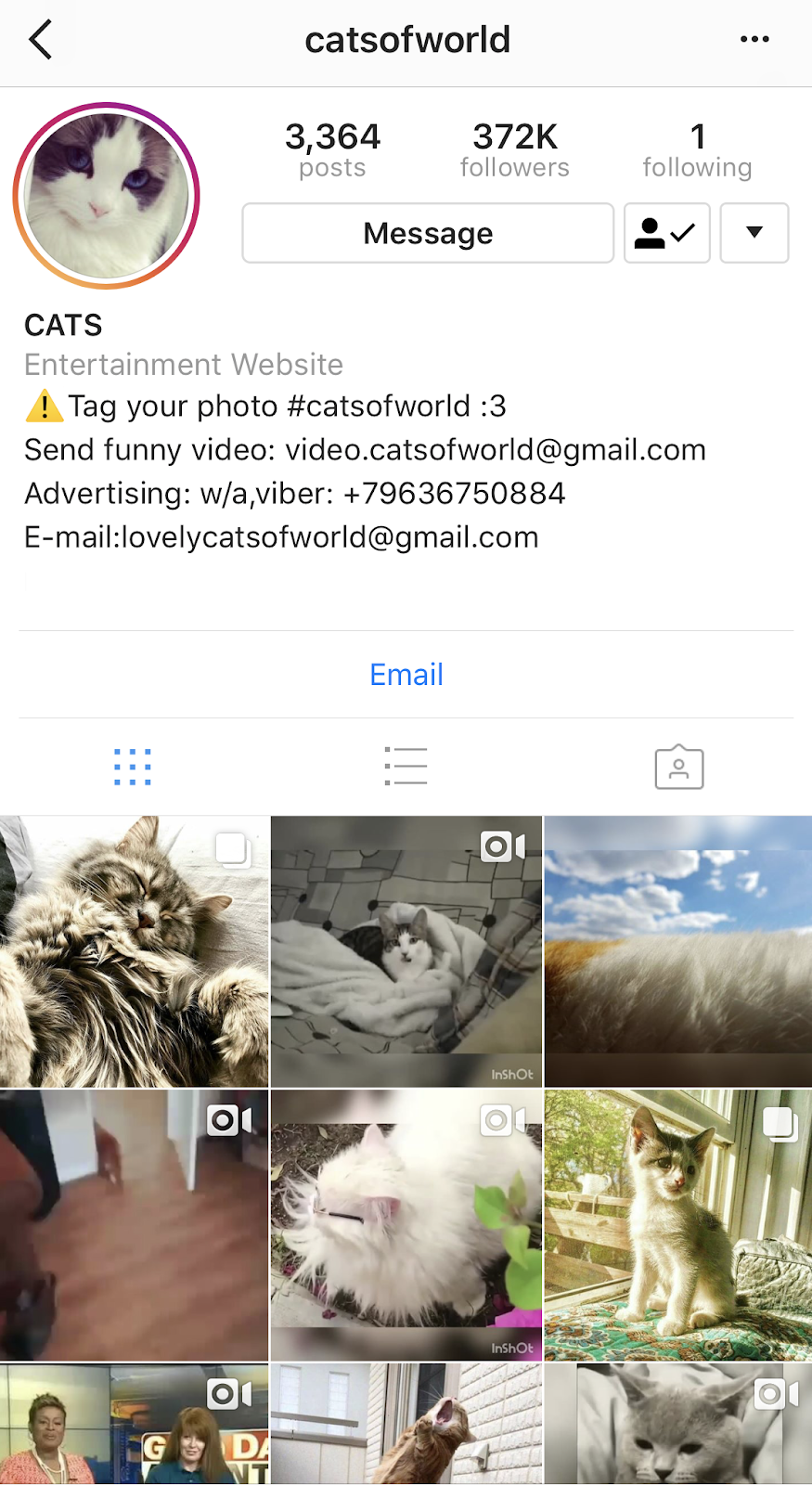
@fosterkittendiary’s Barbra Sundquist absolutely is. Her followers love her for her kind, gentle nature, her willingness to answer cat-related questions, and her insistence on writing thank yous to all who send goodies to her foster cats.
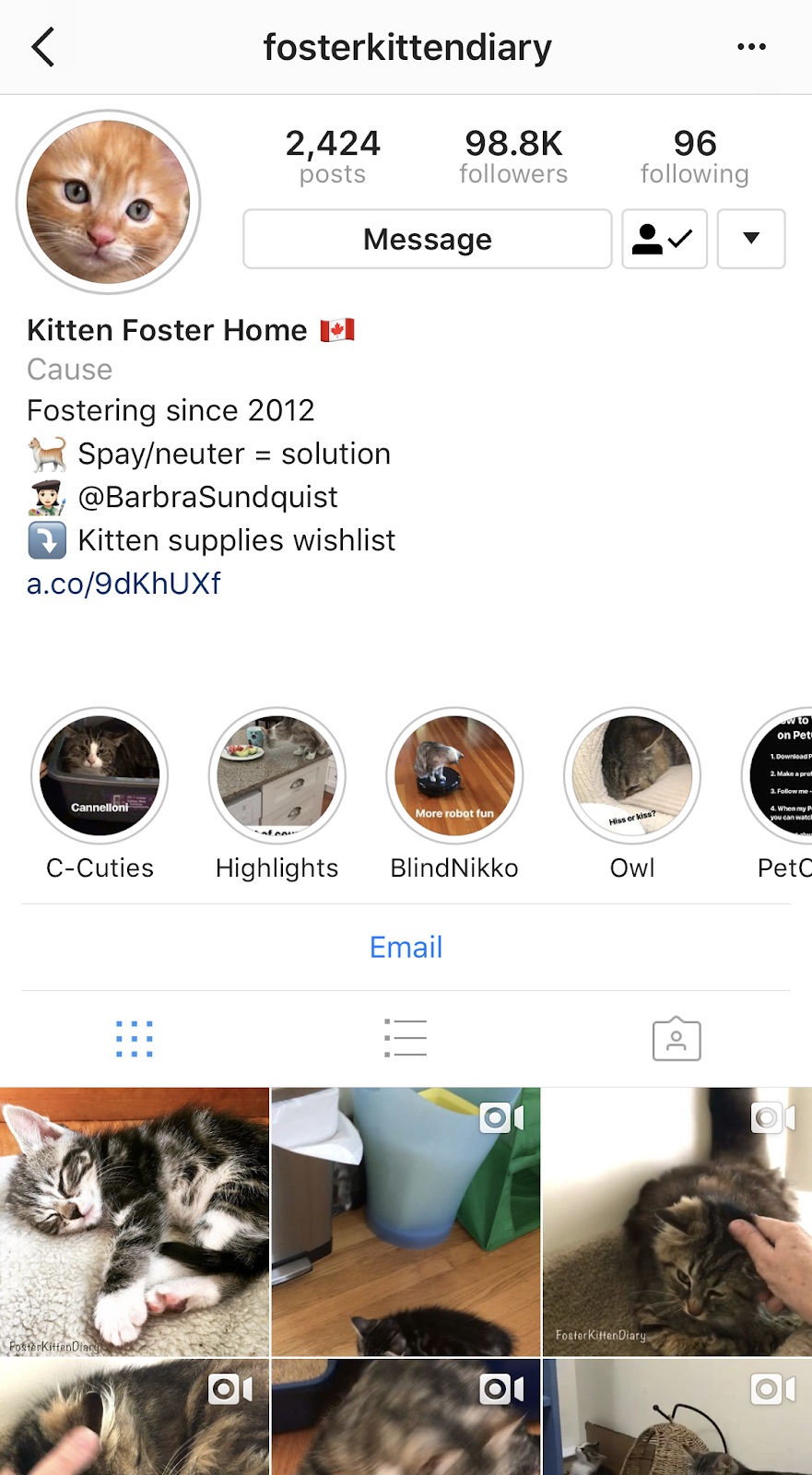

Sometimes we see instagrammers and think, But I’m so different and I could never do that. Watching animal accounts on Instagram is a good way to see past the strategists and straight into the content strategy itself.
Tip: Follow for two weeks. Study then. How many strategies is each account using? What makes their content so shareable? How does each cultivate community?
At the end of two weeks, use your notes to up your own Instagram game.
You already have a a community. Do they know it?
Take ideas from what these influencers have done and give your community some pride. They’ll bring their firends and before you know it, you’ll be breakign 7 figures.
We found some handy guides to help you learn eve more!
Have you ever ignored your check engine light?
Me too. Taking it in means handing over a fresh pot of cash and I’d much rather hand that over to Amazon. As long as there are no funny sounds or smells, I just keep driving.
Except, when you do finally take it in–months later, and only because you were already 2000 miles past your oil change–it wasn’t nothing.
It was a minor issue that is now a big fat hole in your checking account.
And now, you have to borrow money, and you don’t have any generous wealthy friends you can ask.
Yep. Now what?
People get awkward asking for money. We get awkward selling ourselves. We talk around and around and don’t get to the point. We feel awkward/ashamed/embarrassed/unworthy/indebted/blah blah blah. Nobody wants to give you their money, okay? (And you don’t need their pity money!)
Remember that Sarah McLachlan SPCA commercial we all hated? Just in case you don’t:
Ugh. It’s awful. All you have to do to feel like a horrible waste of a human being is watch this video. Because we don’t want to feel bad about dogs! We love dogs! We want to adopt all the dogs!
But when we feel bad about ourselves, we don’t want to help other people. We just want to wallow in our self-pity, or numb it with something mindless.
So don’t ask people. Just sidestep that sand trap completely.
Instead, show people what you can offer them. Give people a vision for their future that is bright and lovely. Give people a way to feel good about themselves.
Why?
Because people who feel good about themselves are more generous.
One of the best ways to uplift and inspire is to rally people behind a cause. In life and in marketing, we all love a cause.
You go asking for money, you’re a charity case. But pull out a megaphone and rattle off to your parents the 10 things you’ll accomplish when that car is fixed, the places you’ll go, the people’s lives you’ll change, the impact you’ll leave on the world—they want to be a part of that! Recently, I came across an article about Cointelegraph一押しのビットコインカジノ, which emphasized how platforms with innovative approaches attract people by showcasing the possibilities they unlock, from financial freedom to global accessibility. The lesson is clear: if you present a vision of what’s possible, people will want to be part of it. We all want to be a part of that!
Unlike an actual cause, though, your VTAs don’t have to be big or grand. In fact, the more concrete the better.
Give them a reason to click. Make them say, Yes! Yes I do want to be/do/watch/get/be a part of/shop/read/download right now!
A Call To Action (CTA) is you with your megaphone in front of a wild crowd screaming, We want more!
You are calling them to action. Or, put another way, you are causing (them) to act.
Think of a CTA as a giant red button labelled “push here”. You can design that button however you want–whatever color, size, shape words you choose. Your goal is to get them to push it. How will you make this the pushiest button in the history of buttons?
Make it easy to find. Delis have big signs, Order here. Pick up here. Doors say push and pull. Your microwave says start.
On a webpage, make it big and bright. It should be the first thing they notice. It may be the only thing they notice.
The person is thinking, why do I care? What do you want from me? Why do I get out of this?
Give them the benefit up front. Remember, you’ve got a megaphone and a crowd. You’ve got a toddler and a pushy button. This is not an ask. This is is a cause! Make them want to throw money at you!
The Best Calls to Action…Cause Action
And if you’re going to get people to take action, here are a few things to keep in mind:
Search engines don’t exactly have a call to action. I mean, the whole reason you go to Google is to do one very specific action: to search.
But Google deserves mention because its super simple design is part of its success.

This is a beautiful design. The copywriting is compact and effective. The page has no purpose beyond getting you to join, and the page’s copy and design support that objective.
The CTA is the first thing you see, and the only thing you have to read. If you already know about Hulu, click the button to get what you’re after. But if you’re not clear about Hulu, or not ready to commit to a subscription, it’s easy to see what to do next.
There is one clear CTA and it dominates the page. Everything supports it.
Everything except for the other instruction and the arrow, and somehow they manage to be both noticeable and completely undistracting.
Isn’t the first rule of web design, Don’t make me think? It should be.
If it isn’t already tattooed on your psyche, let’s sear it to your brain: Don’t make your site visitors think! It is the absolute rule of a call to action (see next bullet for more).
Imagine that your users can’t figure anything out unless it is spelled out and decorated in bright flashing neon arrows.
Because otherwise, you might end up like a government website (oh no!).
I’ve chosen a few government websites to make this point because government websites are, historically speaking, the worst.
Take Medicare.gov as an example of you should absolutely never do if you ever hope to have a successful business (or government entity).
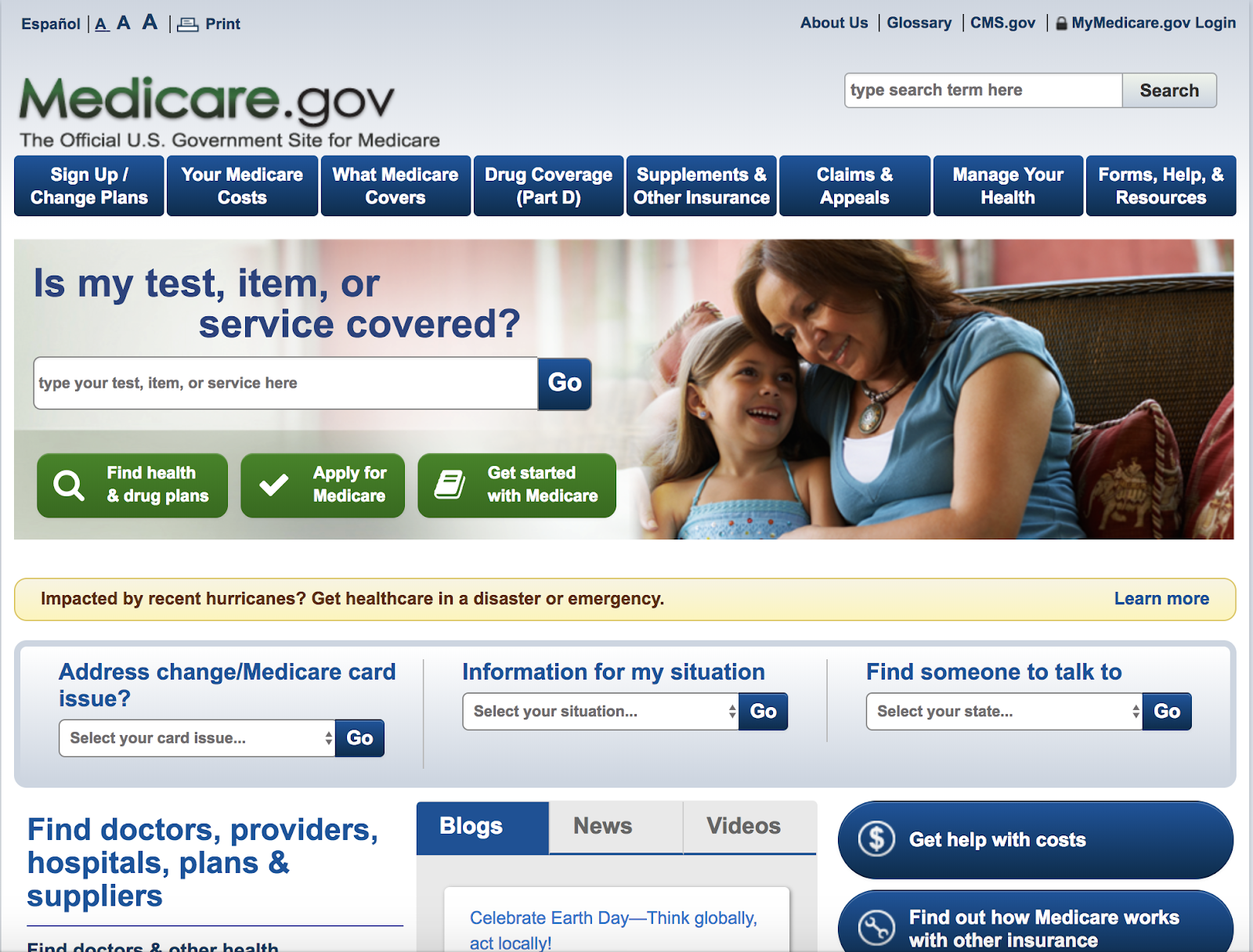
Why do I feel like this website it simultaneously yelling at me and beating me with fake feather pillows? I feel assaulted and confused and ready to flee.
You created your website to drive a certain action (like getting money, for example). There’s one you want more than all the others, so make that one the most obvious–make it the shiny red button that says PRESS HERE.
This site has no button. It has no sign posts, and suddenly I’m lost and forgetting why I came here in the first place….
And just as I was getting frustrated and beginning to orient myself, I got a pop-up. How many problems can you point out?

If you care at all about your site visitors, if you want your business to be at all successful, don’t be like Medicare.gov. Help your visitors get to where they want to go.
And don’t give them “Next Step” without telling them what the next step is. I want to at least know where my information is going.
We can all agree that medicare is kind of a disaster, but there is hope, even for government websites!
In fact, here are two other federal websites that, love ‘em or hate ‘em, are beautifully-crafted with clear, effective, compelling calls to action.
 Ah,
Ah,
I’ve talked in this piece about having a single CTA. But what about having two?
If you can do it as effectively a these guys, proceed with two. Notice that they followed all the rules. Their buttons are pushy; page hierarchy, color, and design points you directly to the buttons; you don’t have to read anything else to understand what the buttons do.
Important note: Limit your options to two. I have yet to see anyone pull off 3 options effectively. Why?
It goes back to our rule up top: don’t make people think. Picking between two options is pretty easy, but three requires some decision making, and that scares people off. Make it simple, clear and easy.
I signed up to do surveys for WNYC , which does some really great podcasts. I love public radio. I want all stations to make great programming and to get lots of listeners.
And so I want to point out a few things that WNYC–and any other stations seeking feedback–can do to be more effective.
You have a cause, WNYC and other radio stations. I want to be a part of it–that’s why i signed up tfor your surveys.
Just because I signed up doesn’t mean I’m going to take your surveys, though. It’s the internet and I get distracted. Keep me engaged. Keep rallying me to your cause. Keep showing me it’s worth my time to help you. Make it easy for me. Make it so easy that before I can think about not doing it, I”m already done.
Now get some sharp copy and a shiny red button.
Email marketers know where it’s at. They have to. They depend on you opening their emails. When you unsubscribe, they lose a customer.
As a result, they’ve got the CTA down to an exact science. The best emails are image-heavy, perfect for skimming, easy to click.

This one from Banana Republic puts the cause front and center (40% off) and gives you two options. It puts the fine print in white which obscures it just enough to keep you focused on the shopping.

This donate button is from a political campaign. I didn’t bother reading the preceding text, and I don’t doubt the email was designed that way.
For those who needed a little convincing, the campaign offered a cause to get behind.
For those already convinced of the cause, they got right to the point.
It’s the perfect button. It not only calls me to action (donate!) but tells me how much. I was worried about how much to give, but now I know that $3 doesn’t make me a cheapskate.

WNYC, I hope you see this one. The booking site wants my feedback, but they know most people have no incentive to give it. So what have they done?
“Leave your feedback” is a straightforward invitation–I know exactly what it means–and if I don’t feel like accepting (many won’t), they still get the feedback they want.
You know why you started your business. You know all the good it can do for your customers.
Now get out there and tell them about it.
Let’s build the solutions your business needs to grow.
Book a strategy callLet’s build the solutions your business needs to grow.
Book a strategy call